
 EN
EN



When a ring is presented inside a beautifully crafted case, something remarkable happens in the mind of the recipient. The packaging becomes part of the experience, shaping how the jewelry is perceived before it is even touched. The Cartier box style has long been recognized as one of the most powerful examples of how presentation elevates perceived value. Its iconic design language communicates luxury, care, and intention in a way that directly influences how a ring is received and remembered.
The question of whether a Cartier box style can genuinely enhance the perceived value of a ring is not merely aesthetic. It touches on consumer psychology, brand signaling, and the emotional architecture of gifting. For jewelers, retailers, and packaging buyers operating in the B2B space, understanding this dynamic is essential. The right box does not just hold a ring — it frames it, elevates it, and transforms the moment of presentation into a lasting impression that customers associate with quality and prestige.
The Psychology Behind Packaging and Perceived Value
How Visual Cues Shape First Impressions
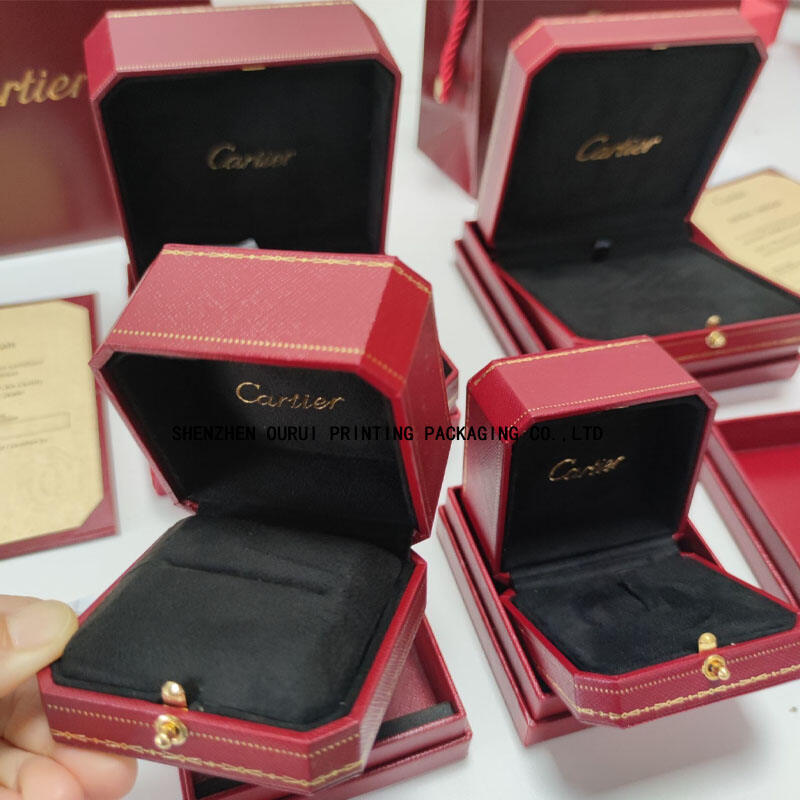
Human perception is heavily influenced by visual and tactile cues encountered before a product is fully examined. When a customer sees a deep red leather exterior paired with a soft black velvet interior — hallmarks of the Cartier box style — the brain immediately begins constructing a narrative of luxury. This happens within seconds and sets the emotional tone for everything that follows. The ring inside has not yet been seen, but its perceived value has already begun to rise.
Research in consumer behavior consistently shows that premium packaging increases the perceived quality of the product it contains. This is not an illusion — it is a well-documented psychological response. When the packaging signals craftsmanship and attention to detail, buyers naturally extend those qualities to the product itself. A ring presented in a Cartier box style benefits from this halo effect in a direct and measurable way.
For B2B buyers sourcing jewelry packaging, this psychological mechanism is a commercial asset. Retailers who invest in packaging that mirrors the Cartier box style are not simply adding decoration — they are actively managing how their products are perceived and valued by end consumers. That is a strategic decision with real impact on customer satisfaction and repeat purchase behavior.
The Role of Tactile Experience in Luxury Perception
Perceived value is not built through sight alone. The moment a customer picks up a box that reflects the Cartier box style, the weight, texture, and resistance of the lid all contribute to the overall impression. A box that feels substantial and opens with smooth, controlled resistance communicates quality in a way that lightweight or flimsy packaging never can. This tactile dimension is a critical component of the luxury experience.
The soft velvet interior of a Cartier box style serves a dual purpose. It protects the ring from scratches and movement, but it also creates a sensory contrast — the firmness of the exterior giving way to a plush, cushioned interior that cradles the jewelry. This contrast is deliberate and effective. It makes the act of opening the box feel like an event, not just a functional step.
For jewelers and gift retailers, replicating this tactile experience through packaging that draws on the Cartier box style is one of the most direct ways to elevate the perceived value of any ring, regardless of its price point. The packaging communicates that the contents are worth protecting, worth presenting, and worth remembering.
Design Elements That Define the Cartier Box Style
The Signature Color and Material Language
The Cartier box style is immediately recognizable through its use of deep red leather on the exterior. This color choice is not arbitrary — red carries strong associations with passion, importance, and celebration, making it an ideal choice for jewelry gifting contexts. The leather texture adds a layer of material richness that distinguishes it from paper or cardboard alternatives. Together, these elements create a visual identity that is both distinctive and emotionally resonant.
When packaging buyers seek to incorporate the Cartier box style into their product lines, the material selection is the foundation of authenticity. Genuine leather or high-quality leather-effect materials are essential to achieving the right look and feel. Shortcuts in material quality are immediately apparent to consumers who have any familiarity with premium jewelry packaging, and they undermine the very perception of value that the packaging is meant to create.
The contrast between the red exterior and the black velvet interior is another defining feature of the Cartier box style. This pairing creates a visual drama that makes the ring appear to float against a dark, luxurious background. The effect is theatrical in the best sense — it turns the act of opening the box into a moment of reveal that amplifies the emotional impact of the gift.
Structural Precision and Proportional Design
Beyond materials and color, the Cartier box style is defined by its structural precision. The box is sized to fit a ring snugly, with no excess space that would allow the jewelry to shift or appear lost inside. This proportional discipline is a hallmark of luxury packaging design and communicates that the box was made specifically for its contents, not adapted from a generic template.
The hinge mechanism and lid closure are equally important. A well-engineered Cartier box style opens smoothly and stays open at a consistent angle, allowing the ring to be viewed and removed without awkwardness. This functional elegance is part of what makes the packaging feel premium. When the mechanics of the box work flawlessly, the overall experience feels considered and complete.
For B2B buyers specifying packaging for ring collections, these structural details are not minor considerations. They are the difference between packaging that enhances the product and packaging that merely contains it. Investing in the structural quality of a Cartier box style is an investment in the customer experience at the most critical moment of the purchase journey.
How the Cartier Box Style Influences Buying Decisions
Packaging as a Purchase Justification Tool
Consumers making high-consideration purchases like rings often look for signals that confirm their decision was the right one. Premium packaging that reflects the Cartier box style serves as one of those confirmation signals. When a buyer receives a ring in a beautifully crafted case, it reinforces the sense that they made a wise and worthwhile investment. This post-purchase validation is a powerful driver of customer satisfaction and loyalty.
In retail environments, the presence of a Cartier box style can also influence the purchase decision before the transaction is complete. When customers see that a ring will be presented in premium packaging, it adds perceived value to the overall offer. This is particularly relevant in competitive retail contexts where multiple rings at similar price points are being compared. The packaging becomes a differentiator that tips the decision in favor of the better-presented option.
For jewelers and retailers sourcing packaging at scale, this dynamic has direct commercial implications. A Cartier box style is not a cost — it is a value-adding component that contributes to the perceived worth of the ring and the overall brand experience. When evaluated in terms of its impact on conversion rates and customer satisfaction, premium packaging consistently delivers a return that justifies the investment.
The Gift Context and Emotional Amplification
Rings are among the most emotionally significant gifts in any culture. They mark engagements, anniversaries, milestones, and declarations of love. In this context, the packaging is not peripheral — it is part of the emotional narrative. A Cartier box style amplifies the emotional weight of the moment by signaling that the giver took care, made an effort, and chose something worthy of the occasion.
The recipient's experience of receiving a ring in a Cartier box style is qualitatively different from receiving the same ring in a plain or generic box. The anticipation built by the distinctive red exterior, the sensory pleasure of the velvet interior, and the drama of the reveal all contribute to an emotional experience that the recipient will associate with the ring itself. This emotional layering is what transforms a piece of jewelry into a cherished memory.
For businesses supplying jewelry packaging, understanding this emotional dimension is essential to making the right sourcing decisions. The Cartier box style is not just a container — it is an emotional amplifier that makes the ring more meaningful, more memorable, and more valuable in the eyes of the person who receives it.
Practical Considerations for Businesses Adopting the Cartier Box Style
Sourcing Quality That Matches the Aesthetic Promise
For retailers and jewelers who want to leverage the perceived value benefits of the Cartier box style, sourcing quality is the critical variable. The aesthetic promise of premium packaging must be matched by the physical reality of the product. A box that looks like a Cartier box style but feels cheap or poorly constructed will create a negative contrast that damages rather than enhances the perceived value of the ring inside.
When evaluating packaging suppliers, B2B buyers should assess material quality, construction precision, and consistency across production runs. The Cartier box style depends on uniformity — every box in a batch should open with the same smooth resistance, display the same depth of color, and present the same quality of velvet interior. Inconsistency in packaging quality sends mixed signals to consumers and undermines the brand positioning that premium packaging is meant to support.
Minimum order quantities, lead times, and customization options are also relevant considerations for businesses adopting the Cartier box style at scale. Retailers with diverse ring collections may need packaging in multiple sizes while maintaining a consistent design language. Working with suppliers who can deliver this flexibility without compromising quality is essential to a successful packaging strategy.
Aligning Packaging Investment with Brand Positioning
The decision to adopt a Cartier box style should be aligned with the overall brand positioning of the jewelry business. For brands operating in the mid-to-premium segment, this style of packaging is a natural fit that reinforces the brand's value proposition. For brands at the entry-level price point, the investment in premium packaging may need to be evaluated against margin constraints and customer expectations.
That said, the perceived value uplift delivered by a Cartier box style can be significant even for rings at moderate price points. When the packaging communicates luxury and care, consumers often perceive the ring itself as more valuable than its price tag would suggest. This perception gap is a commercial opportunity for retailers who understand how to use packaging strategically.
Brand consistency is another important consideration. If a retailer uses a Cartier box style for some products but not others, the inconsistency can create confusion about the brand's positioning. A coherent packaging strategy that applies the same design language across the ring collection creates a stronger and more credible brand impression that compounds over time.
FAQ
Does the Cartier box style work for rings at all price points?
Yes, the Cartier box style can enhance the perceived value of rings across a range of price points. The psychological and emotional effects of premium packaging are not limited to high-end jewelry. Even a moderately priced ring benefits from being presented in a well-crafted case that signals care and quality. The key is ensuring that the packaging quality is genuine and consistent, so the experience matches the visual promise of the Cartier box style.
What makes the Cartier box style different from standard jewelry boxes?
The Cartier box style is distinguished by its combination of a deep red leather exterior, soft black velvet interior, precise proportional design, and smooth mechanical construction. Standard jewelry boxes often use generic materials, inconsistent sizing, and minimal attention to the opening experience. The Cartier box style treats the act of opening the box as a designed moment, which is what sets it apart and makes it so effective at enhancing perceived value.
How does packaging like the Cartier box style affect customer retention?
Premium packaging creates a positive emotional association with the brand that extends beyond the initial purchase. Customers who receive a ring in a Cartier box style are more likely to remember the experience positively, share it with others, and return to the same retailer for future purchases. The packaging becomes part of the brand story, reinforcing the perception that the retailer values quality and customer experience at every touchpoint.
Can the Cartier box style be customized for private label or branded retail use?
Many packaging suppliers offer versions of the Cartier box style that can be customized with brand logos, color variations, or interior printing. For retailers building a distinct brand identity, this customization capability allows them to capture the perceived value benefits of the Cartier box style while reinforcing their own brand presence. It is important to work with suppliers who can maintain the quality standards of the original design language during the customization process.